The Chinese House Game
The Glass Bead GameThe Chinese House Game is Joseph Knecht’s first annual ceremonial Glass Bead Game as Magister Ludi: an ambitious work built on the symbolic order of a traditional Chinese house, and a public triumph made possible by renewed collaboration with Fritz Tegularius. The festival confirms Knecht’s authority at the height of his early success, but its beauty also sharpens his sense of impermanence. Even amid acclaim, he insists that Castalia’s apparent perfection cannot exempt it from the fate of all things.
Conception and Design
The project emerged from a brief moment of rest. Reading the Pocket Calendar for the Magister Ludi, Knecht recognized that, unlike his predecessor, he felt no dread at the prospect of composing the annual Game. The realization left him exhilarated: he was still young enough to find the work inviting, not a burdensome duty requiring him to manufacture enthusiasm. That contrast produced two decisions. If old age ever made the annual composition a chore and left him without ideas, he would relinquish his office; in the meantime, he would begin work on his first ceremonial Game and bring Tegularius into the undertaking.
Knecht had carried the design in his mind since his stay at Mariafels. Its organizing model was the ancient ritual pattern for building a Chinese house: orientation to the compass points, gates and a spirit wall, the arrangement and functions of buildings and courtyards, and their relation to the constellations, calendar, family life, and the garden’s symbolism and style. These were not merely architectural details to decorate a Game. Knecht saw their interlocking rules as a compelling image of the cosmos and humanity’s place within it.
The conception also joined two modes of thought. The mythic spirit embedded in traditional domestic architecture seemed to Knecht intimately fused with the mandarin and magisterial character of speculative scholarship. He had long contemplated the plan until it had, in his mind, become a whole, though he had not yet written it down. Once in office, he had found no opportunity to develop it. The annual festival gave that inwardly formed idea a practical purpose and a public form.
Tegularius and the Work of Collaboration
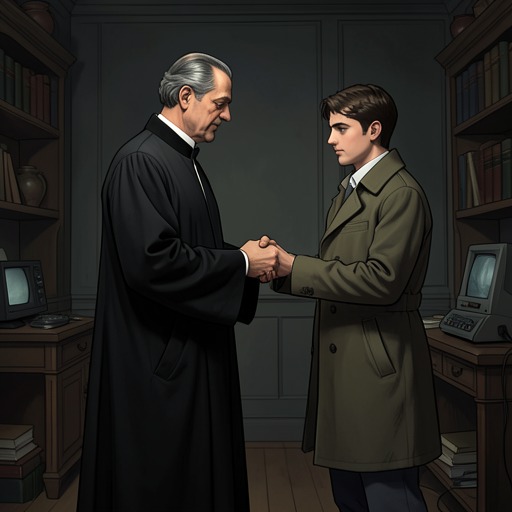
Knecht’s invitation was also an act of friendship. His relationship with Tegularius had recently grown formal and strained: Tegularius approached him with conspicuous deference, while Knecht had been addressing him in the laconic manner of a superior. Instead, Knecht teased him by recalling their student-era disagreement over the value of Far Eastern studies and Chinese learning, then revealed that he had a project on which they could work together.
Tegularius could not read Chinese, but Knecht judged that a philological command of the language was unnecessary. With a briefing from Knecht, guidance from the Far Eastern College, and study of the relevant material, he could learn enough about the symbolism of Chinese architecture to contribute. Knecht proposed that Tegularius take on a substantial part of the preparation, as he had previously assisted with preparations for the prize Game during Knecht’s stay among the Benedictines. Tegularius readily set aside his lack of Chinese and offered himself and his time to the work.
Knecht suggested that Tegularius might study with Elder Brother, the hermit in the Bamboo Grove who had once taught Knecht. The proposal carried a personal resonance: Tegularius might learn the underlying idea from the very figure associated in Knecht’s memories with a life shaped by Chinese thought. Yet, while listening to Tegularius’s report of his visit and later reading the lines about the goldfish, Knecht felt the pull of his own earlier time in the hermit’s hut—the bamboo, the yarrow stalks, and the freedom of student life. He recognized the appeal of Elder Brother’s secluded, self-fashioned world, then turned away from comparison: he had been led along another path and believed he must follow it faithfully.
The Game’s preparation turned the reconciliation into daily practice. Knecht and Tegularius sketched and composed it in the leisure they could find. Knecht entrusted his friend with the selection of materials in the Archives and with the first and second drafts. Tegularius’s eccentric exactitude and imaginative subtlety entered the work: he could linger over details that others would consider finished, rearranging them with restless care. What had begun as a gesture of trust became a form of joint labor in which his distinctive habits enriched the design.
Their collaboration continued beyond this first Game. In later years, each ceremonial Game represented a shared accomplishment. Tegularius valued not only the opportunity to help Knecht but the knowledge that he was indispensable in so consequential a task. At the public performance, he remained unnamed as a collaborator, although the elite knew his contribution. The arrangement restored intimacy without simply reviving their former student relationship: friendship returned in a new form, shaped by the responsibilities and hierarchy of Knecht’s office.
The Festival at Waldzell
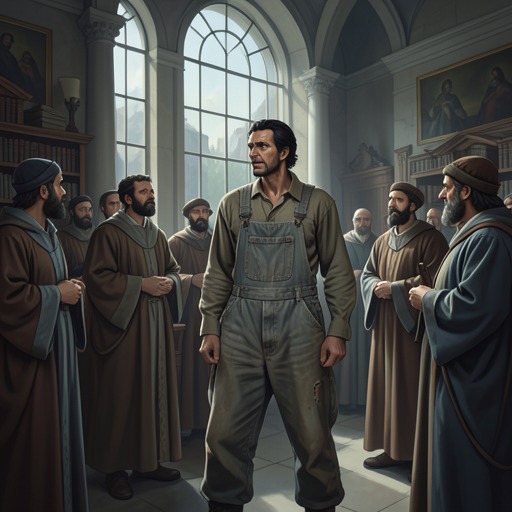
The annual Game became a celebrated event, remembered as the Chinese House Game and often cited afterward. For Knecht and Tegularius it was the happy culmination of their labor; for Castalia and its governing Boards, it vindicated the decision to call Knecht to its highest office. Waldzell, the Players’ Village, and the elite could at last celebrate a successful festival after the previous year’s failure and disgrace.
Knecht’s first public appearance as Magister Ludi was part of the event’s force. He was the youngest and most discussed Magister in Castalian history, and the festival presented an answer to expectations about what he could do. He appeared not as an anxious deputy under suspicion but as the presiding figure of a splendid ceremony: calm, composed, and ceremonially remote amid his acolytes. His gestures guided the stages of the Game. With a luminous golden stylus he inscribed characters on a small tablet; they appeared enlarged on the great board at the rear of the hall, where Speakers read them aloud to a thousand whispering voices and the performance was broadcast beyond Waldzell.
The ceremony made contemplation part of the public event. At the close of the first act, Knecht wrote its summary formula, gave the signal for meditation, set down the stylus, and sat in the prescribed posture. Those in the hall, throughout the Players’ Village and Castalia, and in distant countries followed him into the same meditation until he rose again. The ritual was familiar, yet the performance felt new. The Glass Bead Game’s abstract, apparently timeless forms could take on the inflections of a particular player’s mind, voice, temperament, and handwriting; Knecht’s achievement lay in bringing his own presence to the Game while subordinating personal inspiration to its internal laws.
The assistants and fellow players carried out their parts with disciplined precision, but the ceremony did not reduce them to mere instruments. Even a bow or the drawing of the curtain around the meditating Magister could become, for the participant, an individual enactment of the Game. The great congregation supplied another essential dimension: thousands followed Knecht through its intricate imagery, creating the deep collective response that made the festival more than a demonstration of elite skill. That shared experience reached both the less technically sophisticated devotees, for whom it could be the central substance of the event, and the critics and virtuosi whose understanding was more finely discriminating.
The festival lasted ten days and was acclaimed even by envoys from the outside world, who carried their praise beyond Castalia. It also won new converts to the Glass Bead Game. Its success therefore reached past the immediate vindication of Knecht’s appointment: the Game presented itself to outsiders as a living practice capable of attracting lasting allegiance, not simply as a tradition performed for Castalia’s own elite.
Triumph and the Warning of Impermanence
At the end of the festival, Knecht told Tegularius that they could be content. He acknowledged the wonder and near-perfection of Castalia and the Glass Bead Game, then turned from praise to apprehension: their beauty made it difficult to contemplate them without fearing for them. Everything passed, he said, and Castalia and the Game would not be exceptions. His conclusion was not a denial of the festival’s success; it was a demand that success be considered together with the possibility of loss.
That private remark changes the significance of the public triumph. The ceremony has affirmed Knecht’s command of his office, repaired a friendship through work, and drawn the wider world toward the Glass Bead Game. Yet the same achievement exposes the fragility concealed by its splendor. Knecht can inhabit the ritual fully without treating its perfection as permanent, and he can celebrate the institution while imagining its eventual disappearance.
The biographer identifies this doubleness as central to Knecht’s character and to the account that follows. A purely celebratory record could present his years as Magister as an exemplary sequence of duties performed and successes achieved. The Chinese House Game instead establishes, at the moment of greatest acclaim, a counterpoint to that picture: Knecht’s clear-sighted attention to transience. Its historical reputation belongs to the brilliance of the festival, but its lasting narrative importance also lies in the warning spoken after the applause.